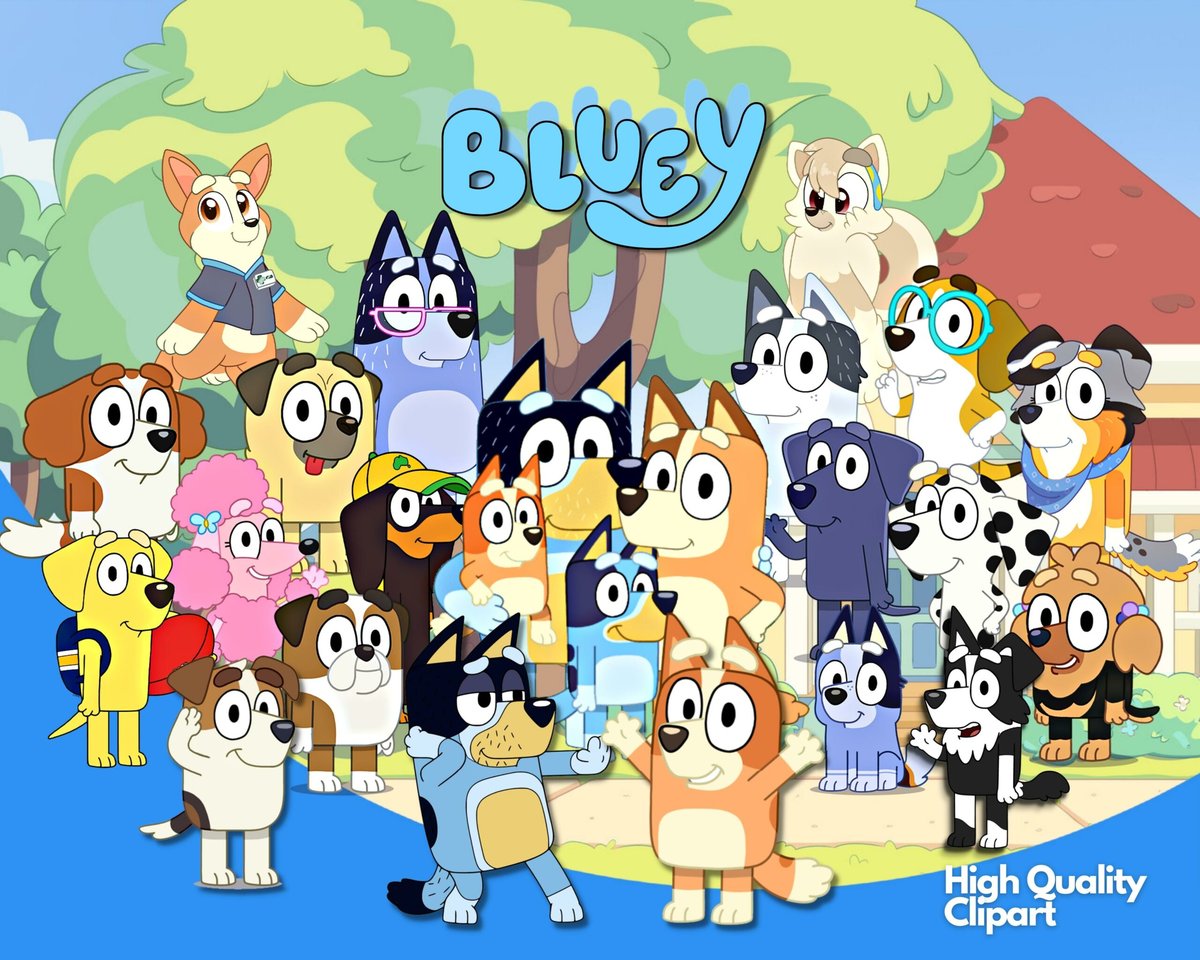
It's no secret that a well-placed image can transform a lesson, sparking curiosity and making abstract concepts feel real. But what if those images came from a world already beloved by children, a world of imaginative play, emotional growth, and boundless fun? That's the power of harnessing Educational & Classroom Bluey Clipart Resources – a dynamic way to bring the magic of the Heeler family into your learning environment and inspire young minds.
This isn't just about sticking Bluey on a worksheet; it's about leveraging a cultural touchstone that resonates deeply with preschoolers and early elementary students. From fostering social-emotional skills to boosting literacy and numeracy, Bluey's world offers a rich, relatable context for intentional teaching.
At a Glance: Bluey Clipart for Learning
- Engage Young Learners: Bluey characters provide immediate recognition and interest, making lessons more captivating.
- Boost Social-Emotional Learning (SEL): Use clipart to illustrate feelings, conflict resolution, and values like kindness and sharing, mirroring themes from the show.
- Enhance Literacy & Numeracy: Create themed word walls, story prompts, counting games, and sorting activities with familiar faces.
- Spark Imagination: Encourage creative play, storytelling, and role-playing inspired by Bluey's adventurous spirit.
- Simplify Classroom Management: Bluey-themed charts, labels, and reward systems add a playful touch to routines.
- Respect Copyright: Understand best practices for sourcing and using images ethically to support creators.
The Bluey Phenomenon: Why It Works in Your Classroom
Bluey, the energetic Blue Heeler puppy from Australia, has captured the hearts of children and adults worldwide, and for good reason. Her animated series is more than just entertainment; it's a masterclass in childhood development. The show expertly weaves together themes of imagination, curiosity, and crucial social-emotional learning (SEL) with every game and adventure.
Educators quickly recognize Bluey's potential as a valuable tool. The episodes often center on specific values like kindness, inclusion, sharing, listening, and achievement, making them perfect springboards for classroom discussions. Children see Bluey, Bingo, Bandit, and Chilli navigate everyday challenges with humor and heart, providing relatable examples for their own lives. This natural connection means that bringing Bluey's visual elements – her signature clipart – into your classroom isn't just a trend; it's a strategic move to tap into pre-existing engagement and make learning deeply resonant.
Decoding "Educational & Classroom Bluey Clipart Resources"
When we talk about "Educational & Classroom Bluey Clipart Resources," we're referring to a broad category of visual assets featuring the beloved characters and elements from the Bluey universe. These aren't necessarily official, pre-packaged "Bluey Teaching Resources" from ABC or Ludo Studio, which often require specific subscriptions like Cool+ for access to their structured frameworks. Instead, we're focusing on standalone images, character cutouts, scene elements, and graphical representations that educators can integrate into their existing lessons and materials.
Think of it as the building blocks for creating Bluey-themed learning experiences. This could range from official printables that you adapt, to fan-made visuals, or even simple illustrations you create yourself inspired by the show. The key is how these visuals are intentionally used to support educational objectives, transforming mundane tasks into exciting Bluey adventures.
Unleashing Learning: Creative Ways to Integrate Bluey Clipart
The versatility of Bluey clipart makes it an invaluable addition to any early learning environment. Its power lies in its ability to make abstract concepts tangible and engaging through familiar, friendly faces.
Visual Aids for Storytelling & Discussion
Bluey and her family are masters of imaginative play and storytelling. You can mirror this in your classroom by using clipart to facilitate narrative development and discussion.
- Character Prompts: Display images of Bluey, Bingo, or other characters showing different emotions (happy, sad, frustrated). Ask children, "What do you think Bluey is feeling here?" or "What might have happened to make Bingo look worried?" This encourages emotional literacy and empathy.
- Sequence Cards: Print out a series of clipart images depicting a simple Bluey-inspired sequence, like getting ready for a game of "Keepy Uppy" or making a "Granny Mobile." Children can arrange them in order, practicing sequencing skills and retelling narratives.
- "What Happens Next?" Activities: Present a scene from the show (or an imagined one) using clipart and ask children to predict outcomes or brainstorm solutions, fostering critical thinking.
Activity Station Enhancers
Every learning center can benefit from a touch of Bluey magic. Clipart can help define themes and make instructions more appealing.
- Themed Centers: Label your dramatic play area as "Bluey's House," your building blocks corner as "Hammerbarn," or your quiet reading nook as "The Creek." Use clipart images to visually reinforce these themes.
- Instructional Visuals: For a "Shadowlands" game, use clipart of characters casting shadows to illustrate the concept. When making a "Bingo Basket" (inspired by the show's craft ideas), a clipart image of Bingo herself can be part of the instructions.
- Sorting & Categorization: Create bins or mats labeled with different characters or objects from Bluey (e.g., "Favorite Toys," "Things from the Park") and have children sort related clipart items.
Social-Emotional Learning (SEL) Prompts
Bluey is renowned for its nuanced exploration of emotions and social dynamics. Clipart can serve as a powerful springboard for these crucial conversations.
- Emotion Cards: Create flashcards with Bluey characters displaying various emotions. Use these for daily check-ins, allowing children to point to how they feel or identify emotions in others.
- Conflict Resolution Scenarios: Print clipart showing two characters in a mild disagreement. Ask children, "What might be happening here?" and "How can Bluey and Bingo solve this problem?" This helps children practice problem-solving and perspective-taking.
- Values Reinforcement: Design posters with clipart illustrating values like "Sharing is Caring" (featuring Bluey and Bingo playing together) or "Listening to Friends" (with characters engaged in conversation).
Literacy Boosters
From early readers to emergent writers, Bluey clipart can make language learning more accessible and fun.
- Word Walls & Sight Words: Integrate Bluey character images alongside sight words or thematic vocabulary words (e.g., "play," "family," "game"). The visual association strengthens recall.
- Story Starters: Provide a clipart image of a Bluey character in an unusual setting or situation and challenge children to write or dictate a story about what happens next.
- Bookmarks: Encourage reading by letting children decorate their own Bluey character images bookmarks to use with their favorite books. This simple craft can make reading feel more personal and exciting.
- Rhyming Games: Use clipart of Bluey and a rhyming object (e.g., "Bluey" and a "chewy" bone) to introduce rhyming pairs.
Numeracy Fun
Counting, sorting, and pattern recognition become adventures when Bluey is involved.
- Counting Games: Create number cards featuring varying numbers of Bluey characters or objects (e.g., "5 Magic Xylophones").
- Pattern Blocks: Design pattern cards using different Bluey characters or elements for children to replicate.
- Measurement: Use clipart of characters of varying heights to introduce concepts like "taller" and "shorter," or measure items using "Bluey units."
- Money Games: Set up a pretend "shop" using clipart of items from Bluey's world (e.g., "Duck Cake," "Magic Claw") and let children practice counting money.
Craft & Art Projects
Many official Bluey printables are designed for crafts, and clipart can extend these ideas or inspire new ones.
- Character Masks: Print full-face Bluey or Bingo clipart, laminate it, and add elastic to create fun character masks for imaginative play or storytelling. Remember that some Bluey activity kits already include templates for character masks.
- Treat Bags: Decorate plain treat bags with Bluey and Bingo clipart for classroom parties or special events, creating a consistent theme.
- Puppets: Mount clipart characters onto craft sticks to create simple puppets for puppet shows.
- Collages & Scene Building: Provide a variety of Bluey clipart elements (characters, props, backgrounds) and let children cut and paste to create their own Bluey scenes. This encourages creativity and fine motor skills.
Reward Systems & Motivation
A touch of Bluey can make behavioral charts and incentives more appealing.
- Sticker Charts: Use small Bluey clipart images as stickers on behavior charts to track progress toward a goal.
- Job Chart Helpers: Assign classroom jobs using clipart of characters performing related tasks (e.g., "Bluey the Line Leader," "Bingo the Materials Helper").
- Certificates: Design "Bluey's Amazing Achiever" certificates to celebrate student successes, featuring a smiling Bluey or Bingo.
Classroom Decor & Theming
Transform your learning space into a vibrant, engaging Bluey-inspired environment.
- Bulletin Boards: Create a "Welcome to Bluey's World" bulletin board featuring a variety of Bluey-themed visuals that rotate with different learning themes.
- Labels: Use small clipart images to label bins, shelves, and learning zones, making the classroom visually cohesive and easy for children to navigate.
- Door Decorations: Welcome students each day with a large Bluey or Bingo cutout on your classroom door.
Finding and Curating Your Bluey Clipart Collection
Finding high-quality, relevant Bluey clipart is the first step, but it's crucial to do so ethically and legally. While the demand for Bluey resources is high, remember that Bluey is a copyrighted intellectual property owned by Ludo Studio and distributed by BBC Studios.
Understanding Copyright and Fair Use
- Personal Classroom Use vs. Commercial Use: Generally, using copyrighted images for personal, non-commercial educational purposes within your own classroom is often considered "fair use" or permitted under educational exemptions, especially if you're transforming the material (e.g., creating a new game from a character image).
- No Redistribution or Sale: You absolutely cannot sell materials that incorporate Bluey clipart, nor can you distribute them widely (e.g., publicly sharing on a blog for download, even if free) without explicit permission from the copyright holders.
- Official Sources are Best: When in doubt, prioritize official channels. The official Bluey website often provides free printables and activity sheets. These are designed for personal use and are a safe bet.
- Fan Art: Be cautious with fan art. While talented artists create amazing Bluey-inspired work, they typically don't have the rights to the characters. Using their art without permission is still a violation of their rights and potentially the original IP holder's.
Where to Look for Bluey Visuals
- Official Bluey Website: This is your primary safe and legal source. Look for "printables," "activities," or "coloring pages." These are fantastic starting points. For example, the detailed coloring sheets of Bluey and Bingo, or scenes from Bluey books, can be cut out and laminated to create your own "clipart."
- Reputable Educational Resource Sites: Some teacher-created marketplaces may offer Bluey-inspired (but not directly copyrighted) materials, or resources where artists have secured appropriate licenses. Always check the licensing terms carefully.
- Creative Commons & Public Domain (Rare for Bluey): While unlikely for a popular, modern IP like Bluey, some images fall under Creative Commons licenses. Always verify the specific license allows for adaptation and educational use.
- DIY from Existing Printables:
- Coloring Pages: Download official Bluey coloring pages. Print them, color them yourself, or have students color them. Then, carefully cut out the characters or elements to create unique, hand-colored clipart.
- Activity Kits: The Bluey activity kit includes items like memory game cards or character masks. These can be adapted. For example, memory game cards are essentially ready-made clipart pairs.
- Screenshots (Use with Extreme Caution): Taking screenshots from episodes for very limited, transformative, personal classroom use might fall under fair use, but this is a grey area. It's generally better to rely on officially provided assets.
When you're ready to expand your visual resources, consider exploring a vibrant Bluey clipart collection that respects copyright and offers diverse images suitable for educational purposes. Always double-check the source and licensing.
Designing Effective Bluey-Themed Learning Materials
Having a folder full of Bluey clipart is one thing; transforming it into meaningful learning tools is another. Thoughtful design principles ensure your materials are both engaging and instructionally sound.
Principles of Good Design
- Clarity is King: Ensure your clipart is clear, high-resolution, and easy for young children to understand. Avoid blurry or pixelated images.
- Age-Appropriateness: The complexity of the images and the activities should match the developmental stage of your students. Bluey, Bingo, and Bob Bilby are ideal for preschoolers and early elementary.
- Visual Hierarchy: Use clipart strategically. Don't overwhelm a page with too many images. The main learning point or instruction should stand out.
- Consistency in Style: If possible, try to use clipart that has a similar art style. This creates a cohesive look and prevents visual distractions.
- Balance Fun with Learning Objectives: While the Bluey theme is fun, the learning goal must remain primary. The clipart should enhance the lesson, not overshadow it. For instance, a "Magic Xylophone Dad" image can be used not just for a laugh, but to discuss emotions or consequences.
Examples in Action
- Bingo's Basket for Sorting: Create a physical or digital "Bingo Basket" using a cutout of Bingo and a basket graphic (or an actual empty tissue box as in the crafts). Children then sort clipart images of objects (e.g., toys, foods, colors) into the basket based on a given criterion.
- The "Shadowlands" Map: Print out a basic map outline of your classroom. Add Bluey and Bingo clipart, along with "shadow" clipart, to create a tangible "Shadowlands" game board, encouraging spatial reasoning and following directions.
- "Frozen Dad" Emotion Chart: Using clipart of Bandit frozen by the magic xylophone, create a chart where children can draw funny faces or write down different emotions, connecting a memorable Bluey moment to emotional expression.
Avoiding Pitfalls: Common Mistakes with Classroom Clipart
While Bluey clipart offers immense potential, a few common missteps can hinder its effectiveness or create issues.
1. Copyright Infringement
As discussed, this is the biggest pitfall. Using images found indiscriminately online, especially those watermarked or clearly from official productions, for anything beyond strictly personal classroom use, risks legal issues. Always prioritize officially provided resources or carefully licensed materials. When using personal creations derived from official coloring pages, ensure you're not distributing them beyond your classroom.
2. Overwhelm and Distraction
Too much of a good thing can be, well, too much. A page cluttered with excessive clipart can be distracting for young learners, drawing their attention away from the core lesson. Use clipart purposefully and sparingly to highlight key information or add relevant visual interest, not just to fill space.
3. Lack of Clear Learning Objective
If you're using Bluey clipart just because it's cute, you're missing an opportunity. Every piece of clipart integrated into a lesson should serve a specific educational purpose, whether it's illustrating an emotion, demonstrating a number, or prompting a story. Ask yourself: "How does this Bluey image help my students learn this concept?"
4. Low-Quality Images
Nothing detracts from a professional-looking and engaging lesson like pixelated, blurry, or poorly cropped clipart. Always use high-resolution images that are crisp and clear when printed or displayed digitally. This shows respect for the material and enhances readability for students. Make sure you find the perfect Bluey-themed visuals that are high quality.
5. Inconsistent Visual Style
Mixing very different art styles of Bluey (e.g., official show stills with simplistic fan art) can be visually jarring and confusing for young children. Strive for a consistent aesthetic to maintain a professional and cohesive learning environment.
Integrating Bluey Beyond Clipart: A Holistic Approach
While clipart is a fantastic starting point, the true power of Bluey in the classroom comes from a holistic approach. Think about how the visual resources can connect to other Bluey-inspired activities and themes.
- Episode Connections: Use clipart to introduce or review specific Bluey episodes. After watching "The Weekend," you might use clipart of Bluey and Bandit playing in the park to discuss outdoor activities or family fun.
- Outdoor Play Inspiration: Bluey's world is full of outdoor adventures. Encourage similar play by using delightful Bluey character images to create activity cards for outdoor games like "Keepy Uppy" or "Shadowlands."
- Role-Playing Games: Provide Bluey character masks (easy to make from printed clipart) or simple props to encourage children to act out scenes from episodes or create their own imaginative Bluey stories.
- Music and Movement: Incorporate music from the Bluey soundtrack into transitions or movement breaks, pairing it with clipart visuals.
- Parent Communication: Send home Bluey-themed newsletters or activity ideas, strengthening the home-school connection and extending the learning.
Integrating Bluey clipart is just one piece of a larger puzzle. By weaving it into a broader context of Bluey-inspired learning, you create a more immersive and impactful educational experience. Imagine enhancing your classroom with delightful Bluey character images that consistently reinforce lessons and joy.
Frequently Asked Questions About Bluey Clipart in the Classroom
Educators often have practical questions when incorporating popular media into their teaching. Here are some common ones regarding Bluey clipart.
Is using Bluey clipart in my classroom legal?
For personal, non-commercial use within your own classroom, creating materials for your students (like worksheets, labels, or decorations), it often falls under fair use or educational exemptions to copyright law. However, you cannot sell these materials, widely distribute them online (even for free download), or claim them as your own original work. Always source from official Bluey printables or reputable educational sites with proper licensing, and avoid sharing your creations publicly if they heavily rely on copyrighted imagery.
What age group is Bluey best for?
Bluey is primarily targeted at preschoolers and early elementary children, typically ages 2-7. The show's themes, language, and pacing are perfectly suited for this developmental stage, making Bluey clipart resources highly effective for these age groups.
Can I make my own Bluey clipart?
You can certainly create your own Bluey-themed visuals for your personal classroom use. This might involve coloring in official Bluey coloring pages and cutting them out, or drawing your own characters inspired by the show. The key distinction is that you shouldn't replicate copyrighted art perfectly and then distribute or sell it as if it were officially licensed or original to you. For personal classroom learning, transforming existing official printables into custom resources is a great, ethical way to go.
Where can I get high-quality Bluey clipart?
The best and safest sources for high-quality, legally permissible Bluey visuals are the official Bluey website's printables section, or educational platforms that specifically state they have licensing for character use. You can also derive your own "clipart" by coloring and cutting out characters from official Bluey coloring books or activity sheets. When you're ready to find a treasure trove of educational Bluey clipart, ensure you verify the source's copyright compliance.
Your Next Adventure: Bringing Bluey's Playful Spirit to Your Classroom
The world of Bluey is a vibrant testament to the power of imagination, empathy, and play in learning. By thoughtfully integrating Educational & Classroom Bluey Clipart Resources into your teaching, you're not just decorating your classroom; you're creating a bridge for young learners to connect with new concepts through a beloved, trusted, and deeply resonant universe.
Start small. Choose one area – perhaps a new literacy center or an SEL discussion point – and experiment with a few Bluey images. Observe how your students react, how their eyes light up, and how easily they engage with familiar faces. From there, you can gradually expand your collection and applications, making sure every piece of clipart serves a purpose beyond mere decoration.
Remember, the goal is to inspire learning fun. Bluey, Bingo, and the entire Heeler family are here to help you do just that, inviting children to explore, imagine, and learn with all the joy of a good game of "Keepy Uppy." Your classroom is ripe for adventure; now go forth and make it wonderful.